
Complete Moving Guide: Your Step-by-Step Resource for a Successful Maryland Move
Moving to a new home represents one of life's most significant transitions. Whether you're relocating across Maryland or to a new state, the process can feel overwhelming without proper organization. This complete moving guide breaks down the entire journey into manageable steps, helping you navigate everything from initial planning to settling into your new space. By following this timeline-based approach, you'll stay organized and reduce stress throughout your move, ensuring a smooth transition to your new community.

8 Weeks Before Moving Day
Starting your moving preparations two months in advance gives you adequate time to handle every detail without last-minute stress. This early planning phase sets the foundation for a successful move.
Calculate Your Budget: Gather Essential Moving Costs
Before moving to Maryland, it’s important to determine your total moving budget early in the planning process to avoid financial surprises. Local moves under 50 miles typically cost between $300 and $1,500, while long-distance moves over 50 miles range from $2,000 to $5,000 or more. Consider these common expenses when creating your budget:
- Local moves (under 50 miles): $300-$1,500
- Long-distance moves (over 50 miles): $2,000-$5,000+
- Professional packing services: $200-$1,000
- Packing materials: $100-$300
- Moving insurance: $200-$500
- Storage units: $50-$300/month
- Truck rental for DIY: $20-$100/day plus fuel
- Travel expenses (gas, meals, lodging)
Set aside a 10-15% buffer for unexpected costs. Understanding insurance coverage options, including basic liability versus full-value protection, helps you make informed decisions about protecting your belongings.
Plan and Declutter Early
Walk through every room and sort items into four categories: keep, donate, sell, and discard. Host garage sales or list items on Facebook Marketplace to offset moving costs. Donate usable items to local charities for tax deductions. Moving less translates directly to lower costs since companies charge based on weight and volume.
Creating a Moving Binder
Organize all moving-related documents in a dedicated three-ring binder with tabbed sections. Include important papers such as moving company contracts, estimates, and insurance policies. Add utility account numbers, contact information for service providers, and address change confirmations. Create sections for inventory lists, receipts for moving expenses, and floor plans of your new home. Keep your moving binder accessible and update it regularly throughout the entire process.
Research and Book Movers
Research reputable moving companies in Maryland and request detailed service information. Get written quotes from at least three companies to compare pricing. Verify proper licensing through the Federal Motor Carrier Safety Administration for interstate moves or the Maryland Public Service Commission for local relocations. Read online reviews on the Better Business Bureau to learn from customer experiences. Book early for peak season between May and September when demand is highest.
Start Gathering Packing Supplies
Stock up on essential packing materials early. Purchase sturdy boxes in various sizes and buy heavy-duty packing tape, bubble wrap, and packing paper. Find free boxes at grocery stores, liquor stores, and bookstores. Check community groups on social media for free moving supplies. Expect 60-80 boxes for an average three-bedroom home.
4-6 Weeks Before Moving Day
One to two months before your move, shift focus to active packing and making important decisions about how you'll execute your move.
Begin Packing Non-Essential Items
Start packing items you use infrequently, including seasonal decorations, books, and off-season clothing. Pack one room at a time to maintain organization. Label each box clearly with contents and the destination room. This early packing reduces stress as moving day approaches.
Packing Tips for Moving: Room by Room Strategy
Smart packing reduces damage risk and makes unpacking more efficient. Taking a strategic, room-by-room approach helps you stay organized throughout the packing process.
Kitchen Packing Techniques
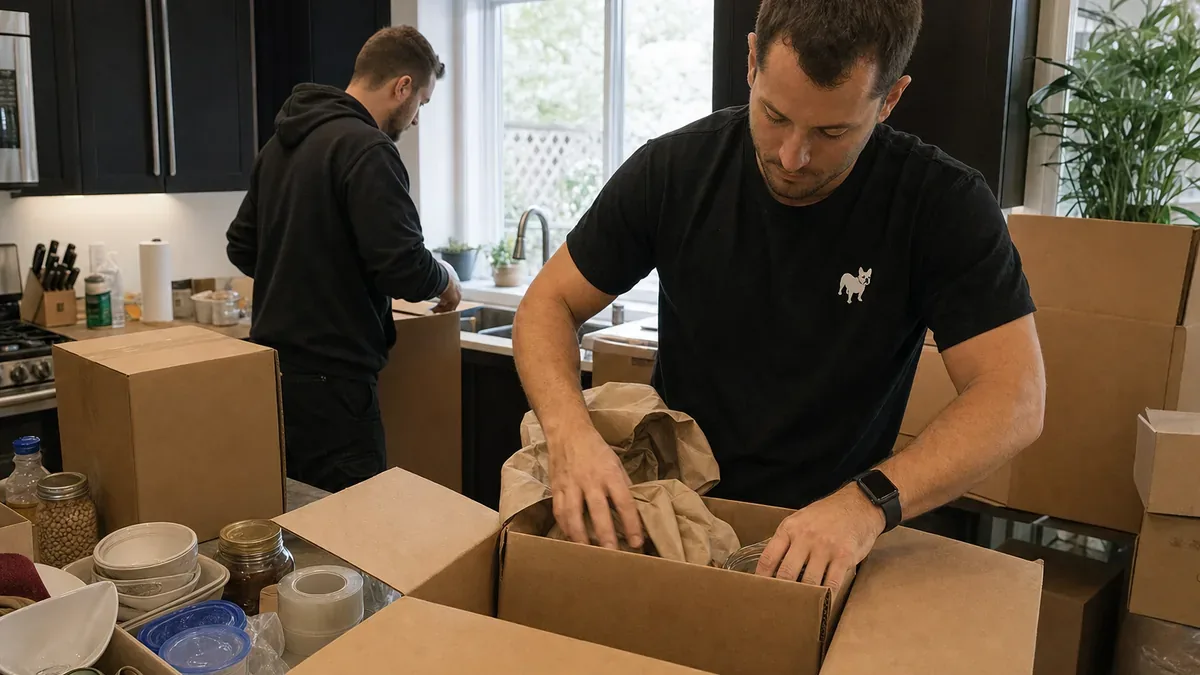
Wrap dishes and glassware individually with bubble wrap or packing paper. Use dish barrel boxes designed for fragile kitchen items. Label boxes by cabinet location for easy unpacking. Pack pantry items separately and check expiration dates. Pack heavy items like canned goods in smaller boxes.
Bedroom and Closet Organization
Use wardrobe boxes for hanging clothes to keep them wrinkle-free. Protect mattresses with plastic mattress bags. Organize jewelry securely in small padded containers. Disassemble bed frames when necessary. Keep hardware in labeled bags taped to furniture. Pack bedding in vacuum-seal bags to save space.
Living Areas and Fragile Items
Protect electronics with original packaging whenever possible. Take photos of electronic setups before disconnecting cords. Wrap artwork and mirrors carefully with corner protectors. Secure lamps and decorative pieces with cushioning. Remove lightbulbs and wrap shades separately. Mark all boxes containing fragile items on multiple sides.
Packing Special Items: Pianos, Artwork, and Plants
If your move requires moving pianos, valuable items, or heavy furniture, it’s important to find specialized movers for upright and grand items. Professional moving prevents damage to instruments and homes. Crate valuable artwork with custom wooden crating for protection. Prepare plants by watering the day before and pruning excess growth. Check state regulations for moving plants across state lines.

2 Weeks Before Moving Day
Two weeks out marks the critical transition phase where administrative tasks and intensive packing converge. Stay focused on completing essential notifications and transfers.
Coordinate Logistics and Utilities
Finalize details with your moving team, including arrival time and contact information. Contact utility companies for service transfers at both addresses. Schedule disconnection at your old address for the day after your move. Schedule activation at your new address for the day before or day of your move. Set up your electricity account with BGE if moving to central Maryland. Arrange water and sewer services with your municipal provider, such as WSSC Water for Montgomery and Prince George's counties. Transfer internet and cable services.
Notify Important Parties and Change Your Address
File your change of address with the United States Postal Service at least two weeks before moving. Update your address with banks, credit card companies, and loan providers. Notify insurance providers, including health, auto, home, and life insurance. Update employer records and payroll information. Change your address on vehicle registration and driver's license through the Maryland Motor Vehicle Administration within 30 days of moving. Update voter registration at your new address.
School and Medical Records Transfer
Request official transcripts from your current school well in advance. Gather enrollment documents and immunization records for children. Research and contact new schools in your area. Transfer prescription medications to a pharmacy in your new area. Request copies of medical records from current doctors. Find new primary care doctors and dentists. Research specialists if needed.
Moving with Pets
Keep pets in a quiet, secure room during packing to reduce stress. Prepare a pet essentials bag with food, water, medications, a leash, and comfort items. Transport pets separately in your vehicle when possible. Update pet identification tags and microchip information with your new address. Find and research a new veterinarian before moving day. Maintain regular feeding schedules to keep pets calm. Consider boarding pets during moving day if chaos becomes too stressful.
Pack Strategically and Label Everything
Pack items from the same room together for organization. Use a color-coding system or numbered inventory list. Pack heavy items like books in smaller boxes and lighter items in larger boxes. Wrap fragile items individually with cushioning material. Mark boxes with "FRAGILE" on multiple sides. Keep similar items together for easier unpacking.
Final Week Before Moving Day
The final week requires completing all remaining preparations and confirming every detail. This is your last chance to address anything you've overlooked.
Complete All Remaining Packing
Finish packing all rooms except daily essentials. Seal all boxes securely with heavy-duty tape. Create a master inventory list of all boxes. Pack items you'll need until the last moment, including kitchen basics and toiletries. Leave cleaning supplies accessible for final cleaning tasks.
Prepare Moving Day Essentials Box
Pack personal toiletries, including soap, toothbrush, and toothpaste. Include toilet paper, paper towels, and hand soap. Pack prescription medications and a basic first aid kit. Include phone chargers and important electronics. Pack basic tools like a screwdriver, a hammer, tape, and scissors. Keep important documents in a waterproof folder, including IDs and passports.
Include moving contracts and insurance documents. Pack a complete change of clothes for each family member. Include snacks, bottled water, paper plates, and plastic utensils. Add pet supplies if applicable. Include bedding essentials like sheets, pillows, and blankets for the first night.
Confirm Details with Movers
Contact your moving company to confirm arrival time and date. Verify the address for both pickup and delivery locations. Confirm contact information for the moving team. Review any special instructions for accessing your property. Clarify payment method and final cost estimates. Ask about parking requirements at both locations.
Measure Furniture and Doorways
Measure all large furniture pieces, including sofas, beds, dressers, and appliances, before moving day. Measure doorways, hallways, staircases, and elevators at both your current home and new residence. Disassemble furniture that won't fit through doorways. Create a furniture layout plan for your new home using floor plans and measurements.
Prepare Your Home for Moving Day
Clear pathways throughout the home for easy furniture removal. Protect floors with cardboard or furniture pads in high-traffic areas. Remove wall decorations and patch any holes. Reserve elevator time if you live in an apartment building. Arrange for parking permits if needed in your neighborhood.
Disconnect and prepare appliances for moving. Defrost your refrigerator and freezer at least 24-48 hours before moving day. Drain water from washing machine hoses and dishwasher connections. Dispose of hazardous materials properly, including paint, chemicals, pesticides, and propane tanks, since movers cannot transport these items.

Moving Day
Moving day represents the culmination of weeks of planning and preparation. Staying organized and focused ensures everything proceeds smoothly from start to finish.
Morning of Moving Day Preparation
Wake up early to allow plenty of time before the movers arrive. Do a quick walkthrough to ensure all boxes are sealed and labeled. Clear pathways throughout the home for easy furniture removal. Keep your essentials box and important documents with you. Confirm movers are on schedule and have the correct address. Have payment ready according to your agreed terms.
Final Walkthrough Checklist
Walk through every room systematically before items are loaded. Check all closets, cabinets, and storage spaces for forgotten items. Look behind doors and under furniture for small belongings. Verify attic, basement, and garage are empty. Check outdoor areas, including sheds and storage units. Take photos of empty rooms for your records.
Supervising the Loading Process
Be present and available to answer questions from movers. Point out fragile items that need special handling. Verify the inventory list matches what's being loaded. Watch for proper padding and securing of furniture. Ensure boxes are loaded strategically with heavy items on the bottom. Keep communication open with the moving team leader throughout the process.
Before Leaving Your Old Home
Do one final walkthrough of the entire property. Read all utility meters and document final readings. Verify all windows and doors are locked securely. Turn off lights and adjust thermostat appropriately. Collect all keys, including the mailbox, garage, and gate remotes. Take final photos of the property condition. Drop off keys according to the lease or sale agreement.
Arriving at Your New Home
Arrive before the movers to prepare the space. Verify utilities are functioning, including electricity and water. Clean high-traffic areas and bathrooms quickly. Place floor protection at entrances and high-traffic zones. Direct movers on furniture placement, room by room. Check items off the inventory list as they're unloaded. Inspect furniture and boxes for visible damage immediately.
Settle In: Making Your New House Feel Like Home
Settling into your new home transforms a space into a comfortable living environment. Prioritize unpacking essential rooms first, including the bedroom, bathroom, and kitchen, to establish basic functionality within the first 24 to 48 hours.
First Week Priorities
Unpack essential rooms first, including the bedroom, bathroom, and kitchen. Set up beds for comfortable sleeping. Verify all utilities work properly, including electricity, water, gas, and internet. Test heating and cooling systems, appliances, and plumbing. Locate critical home features like the water shutoff valve and circuit breaker panel. Install or test smoke detectors and carbon monoxide detectors. Change locks for security. Set up kitchen basics for preparing meals.
Exploring Your New Community
Introduce yourself to neighbors and exchange contact information. Identify nearby essential services like grocery stores, pharmacies, and banks. Locate emergency services, including hospitals and urgent care facilities. Find local doctors and dentists for your family. Research nearby schools, parks, and libraries. Visit the Montgomery County Government website for local resources and services if moving to Montgomery County. Understand HOA rules or community regulations.

Choosing Between DIY and Professional Movers
Deciding between a self-move and hiring professional movers is one of the most important choices you'll make during relocation. Both options have distinct advantages and drawbacks that depend on your budget, timeline, physical capabilities, and moving distance.
DIY Moving: What You Need for a Successful Move
DIY moving requires a substantial time commitment, often taking several full days. Hidden costs add up quickly throughout the process, beyond just truck rental fees. Truck rental fees range from $20-$100 per day, depending on truck size. Additional costs for fuel, mileage charges, and moving equipment like dollies and furniture pads accumulate rapidly.
You need to gather all packing supplies yourself and coordinate every aspect of the move. Recruiting friends and family for help requires asking at least three weeks in advance. Aim for a minimum of 4-6 helpers for proper rotation and breaks throughout the day. Provide clear instructions on timing, parking availability, and the physical tasks expected of helpers.
A higher risk of personal injury exists without professional training in proper lifting techniques. Greater potential for property damage to belongings and homes occurs during amateur moves. You're responsible for all logistics and problem-solving when unexpected issues arise.
Hiring Professional Movers: What to Know Before You Book
Research multiple companies and check credentials carefully before making your decision. Verify licensing through the Federal Motor Carrier Safety Administration database for interstate moves. Check Better Business Bureau ratings and read recent customer reviews from multiple sources. Get accurate written estimates from at least three different companies for comparison.
Understand the difference between binding and non-binding estimates to avoid surprise charges. Ask detailed questions about hidden fees and potential surcharges for special circumstances. Review insurance options carefully, comparing basic liability versus full-value protection coverage. Read contracts thoroughly before signing anything and ask questions about unclear terms.
Benefits include professional experience and efficient processes developed over years of practice. Trained crews understand proper lifting techniques and packing strategies that prevent damage. Insurance protection covers damage during the move, providing peace of mind and financial protection. Significant time savings allow you to focus on other moving tasks like utility transfers and address changes.
When DIY Moving Makes Sense
Local moves within the same neighborhood or apartment complex work well for DIY efforts. College students or young professionals with minimal belongings can handle smaller moves independently. Moving just a few items or a single room of furniture doesn't justify professional moving costs. Extremely tight budgets with no flexibility for professional services necessitate DIY approaches. Short-distance moves under 50 miles with accessible parking reduce DIY moving complexity.
When Professional Movers Are Essential
Long-distance moves across state lines require coordination that professionals handle more efficiently. Families with young children, elderly relatives, or pets needing attention benefit from professional help. Valuable antiques, pianos, artwork, or fragile collections require expertise that only professionals provide. Physical limitations, injuries, or health conditions prevent the heavy lifting DIY moving demands. Time-sensitive moves related to job starts, lease expirations, or closing dates leave no room for delays. Large homes with heavy furniture and many belongings overwhelm amateur moving efforts.
Conclusion
A successful move requires careful planning, strategic execution, and attention to detail throughout each phase of the relocation process. By following this complete moving guide, you've learned how to budget effectively, declutter efficiently, research moving companies, pack strategically, coordinate logistics, avoid scams, and settle into your new home with confidence.
When you're ready to make your move in Maryland, trust Bulldog Movers to handle your relocation with professionalism and care. Contact Bulldog Movers today for a free quote and experience the difference that expert moving services make in creating a smooth, successful transition to your new home.