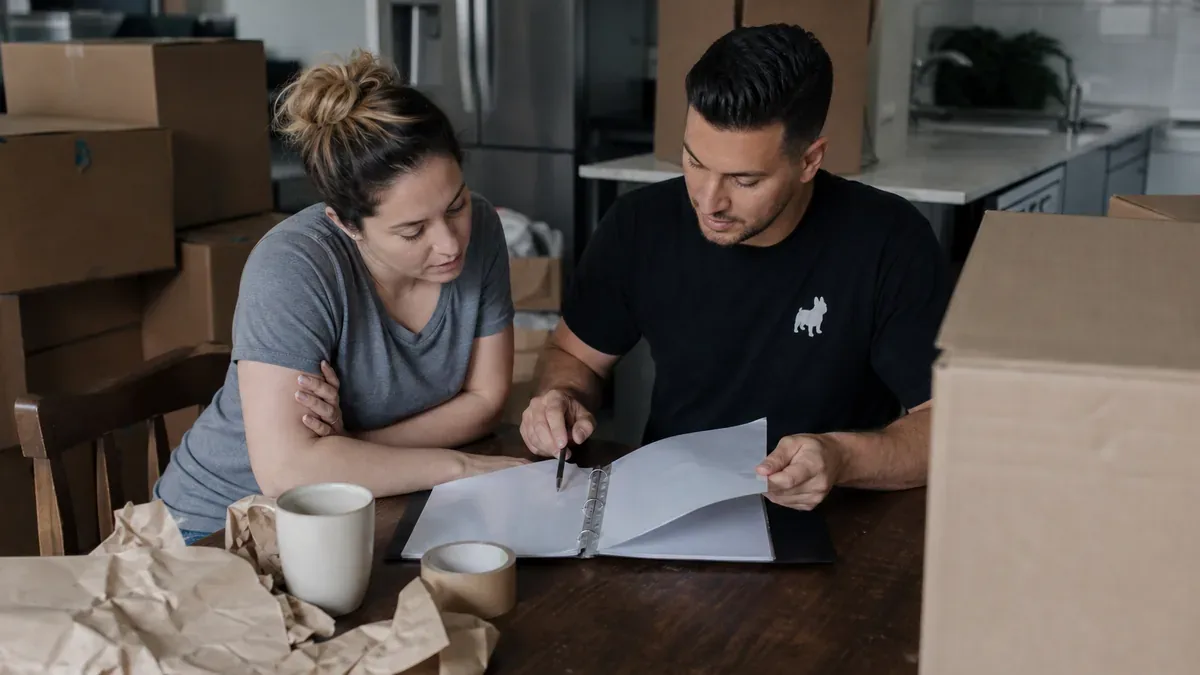

What goes in a moving binder?
A moving binder should include your moving estimates, signed agreements, inventory, room labels, receipts, utility confirmations, address-change checklist, school or medical records, floor plans, furniture measurements, contact list, and move-day schedule. Keep it with you during the move instead of packing it on the truck.
- Use one physical binder, one digital folder, or both.
- Keep originals and critical IDs separate from packed boxes.
- Review the binder weekly until move day.
How to build a moving binder
- 01
Set up the sections
Create tabs for estimates, contracts, inventory, receipts, utilities, address changes, floor plans, contacts, and move-day schedule.
- 02
Add quote and mover documents
Keep estimates, service scope, valuation choices, building instructions, COI requests, and signed paperwork together.
- 03
Build a room-by-room inventory
List boxes, furniture, fragile items, serial numbers, photos, and high-value items by room.
- 04
Track address changes and utilities
Record confirmations for MVA, voter registration, utilities, internet, mail forwarding, schools, subscriptions, and insurance.
- 05
Use it on move day
Keep the binder with you so contacts, access notes, parking details, box labels, and paperwork are available immediately.

Recommended binder sections
Use these sections as a template-style checklist with clear tabs and scannable tasks. A printable checklist can make the binder easier to maintain during the final week before move day.
- Mover estimates, contracts, valuation choices, and payment notes
- Inventory by room, box numbers, and high-value item photos
- Receipts, moving budget, and reimbursement notes
- Utility shutoff/start dates and service confirmations
- Address-change tasks for MVA, voter registration, banks, insurance, schools, and subscriptions
- Floor plans, furniture measurements, parking, elevator, and building access notes
Address-change and records reminders
Use the binder to track address changes, voter registration updates, utility confirmations, school records, medical records, and mover documents. Current IRS guidance limits federal moving expense deductions for most taxpayers, so keep receipts for budgeting and reimbursement first and tax questions second.
Moving binder FAQ
Should my moving binder be physical or digital?
Either can work. Many people use both: a physical binder for move-day paperwork and a digital folder for backups, photos, estimates, and receipts.
What should stay with me on moving day?
Keep IDs, prescriptions, school records, medical records, insurance documents, payment details, keys, chargers, valuables, and the moving binder with you.
Can I deduct moving expenses?
For most taxpayers, the federal moving expense deduction is not available under current IRS rules, with limited exceptions such as qualifying Armed Forces moves. Check current IRS guidance or a tax professional.
How often should I update the binder?
Review it weekly during planning, then daily during the final week before the move.